We all look in the mirror every day. Sometimes it’s just to brush our hair, shave, or apply makeup. But occasionally, we might feel like we’re looking at a stranger. That “tired” expression left by the years often fails to reflect who we truly are inside. When you start asking, “I still feel like I’m in my 30s, so why does this reflection look like it’s in its 50s?” your story is actually just beginning.
Facelift surgery, or rhytidectomy, is not merely about pulling sagging skin tight; it’s about retuning the rhythm of time on your face. At Forever Clinica, with every operation we perform in the heart of Istanbul, we witness a profound truth: people don’t just want to look younger—they want to be friends with that person in the mirror again. Let’s explore the medical, aesthetic, and human details of this journey together.
What Exactly is Facelift Surgery? An Architectural Perspective
Think of a facelift as a home renovation. If you only repaint the walls, it’s a short-term fix. But if you strengthen the foundation, update the plumbing, and fix the building’s skeleton, that house will stand as firm as the day it was built for decades to come.
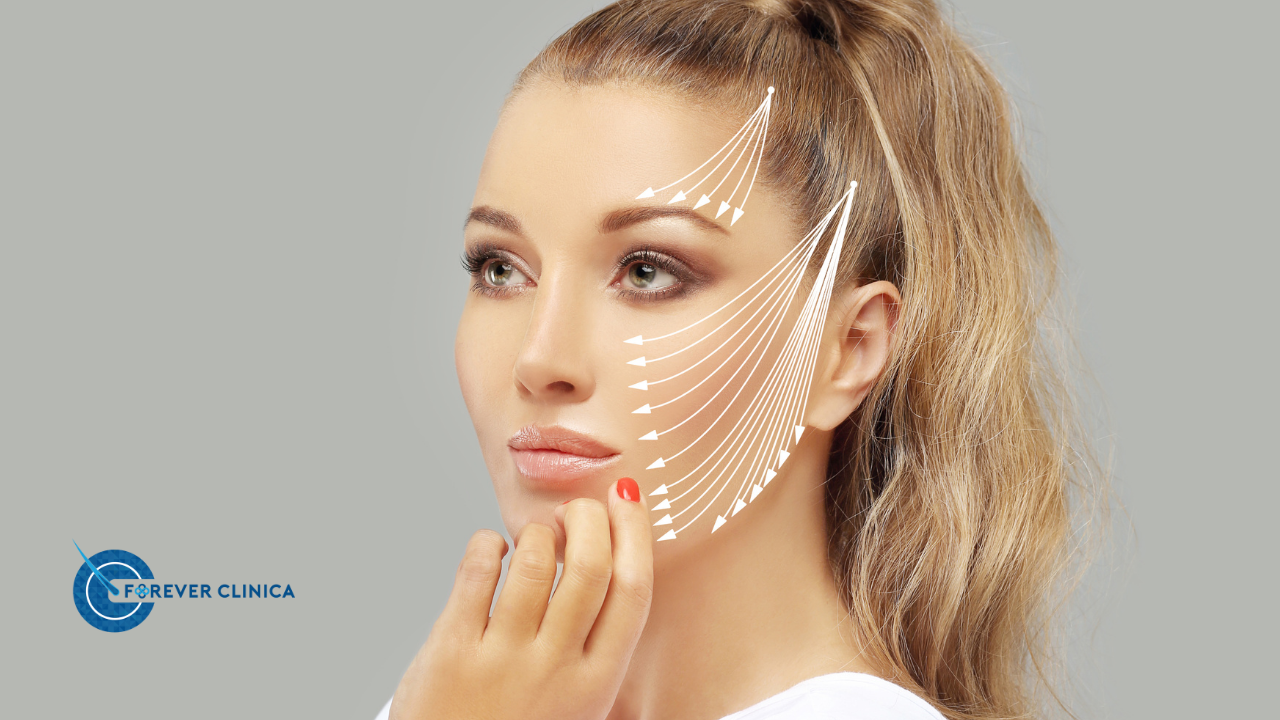
In medical terms, a facelift is the surgical removal of signs of aging in the face and neck area. However, modern surgery goes far beyond the skin. Our primary focus is the SMAS (Superficial Musculoaponeurotic System) layer. This layer is the architectural scaffold of your face. Facelift surgery is the art of moving this sagging scaffold back to its original position and redraping the skin over it, removing any excess.
Why don’t we just pull the skin? If you only pull the skin, you get that infamous “wind tunnel” look—artificial, tight, and unnatural. At Forever Clinica, our goal is to achieve results so natural that no one suspects surgery; they’ll simply say, “You look amazing, have you been on vacation?”
Why Does Our Face Sag? The Physiology of Time
This process isn’t just about gravity. Facial aging happens in three main stages:
Volume Loss: The plump fat pads in the cheeks and temples diminish or shift downward with age.
Tissue Laxity: Collagen and elastin production slows down, causing the skin to lose its “snap.”
Bone Resorption: Believe it or not, even our facial bones lose some volume over time, providing less support for the tissues above.
When these changes combine, the jawline becomes blurred, the neck begins to sag (often called a “turkey neck”), and the lines around the mouth (nasolabial folds) deepen. This is where a facelift steps in to turn back the clock.
Facelift Techniques: Which One is Right for You?
Every face tells a different story. Applying the same technique to everyone would be like trying to fit everyone into the same off-the-rack dress. At Forever Clinica, we provide “tailor-made” planning.
Classic (Full) Facelift: The most comprehensive method for those with significant sagging in the cheeks, jawline, and neck.
Mini Facelift (MACS Lift): A procedure with smaller incisions, preferred for our patients—usually in their 40s or 50s—where sagging is milder.
Deep Plane Facelift: This is the pinnacle of facial surgery. It involves releasing the SMAS layer entirely and moving it upward at the most natural angle. The recovery is often smoother, and the results are the most long-lasting.
Mid-Face Lift: A technique that focuses specifically on the cheek area, erasing that tired look and highlighting the cheekbones.
The Surgical Journey: What to Expect
The decision to have surgery always brings a mix of excitement and a little anxiety. This is perfectly normal. We know questions like “Will I wake up?” or “Will it hurt a lot?” occupy your mind.
Preparation and Anesthesia Our surgeries are performed in fully equipped hospitals under general anesthesia. While you are in a deep and peaceful sleep, we begin our work. The operation time can vary between 3 to 6 hours depending on the technique.
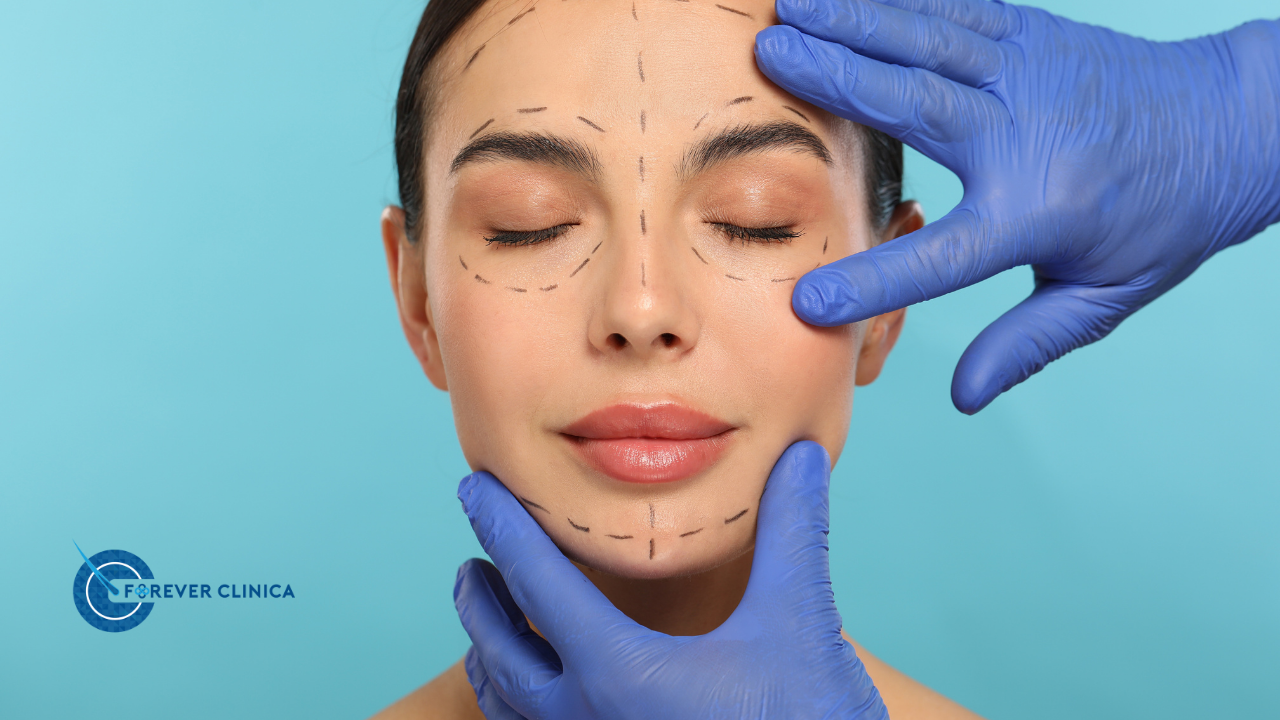
Where Will the Incisions Be? One of the biggest fears is scarring. A professional surgeon knows how to hide their tracks. Incisions are hidden within the natural creases in front of the ear, behind the ear, and within the hairline. Once healing is complete, these marks are nearly impossible to detect.
During the Operation Tissues are moved back to where they belong, muscles are tightened, and the skin is gently draped. After the excess skin is removed, the procedure is completed with microscopic sutures.
An Aesthetic Experience in Istanbul: Why Turkey?
Why do patients from all over the world choose Istanbul, Turkey? The answer isn’t just cost; it’s expertise and artistry. Turkish surgeons are among the most experienced in the world, possessing high case volumes and advanced technical skills.
At Forever Clinica, we combine the enchanting atmosphere of Istanbul with medical excellence. While you breathe in the cool air of the Bosphorus, we plan your health and beauty. Receiving treatment in Istanbul is not just a surgery; it’s a story of renewal blended with luxury accommodation, VIP transfers, and the spirit of the city.
The Recovery Process: Step-by-Step to a New You
It is very natural to have some fullness, edema, and perhaps slight bruising on your face in the first few days. Your body is repairing itself!
The First 24 Hours: You stay in the hospital under observation. Small tubes called drains are often used to remove fluids from under the tissues.
The First Week: Swelling reaches its peak and then begins to subside rapidly. Usually, 10-14 days are enough to return to social life.
The First Month: About 80% of your face will have settled. No one will realize you had surgery; they’ll just notice you look “refreshed.”
6 Months to 1 Year: The final results become clear. Your skin glows, your contours are sharp, and the bond between you and your friend in the mirror is stronger than ever.
Frequently Asked Questions (FAQ)
1. Is a facelift permanent? The surgery turns back the clock by about 10-15 years. The aging process continues, but you will always look better than you would have without it. You’ll essentially look like a younger version of yourself as you age further.
2. At what age should I have a facelift? There is no “perfect” age; there is only a “need.” Someone at 40 with significant sagging and someone at 60 with resilient skin have different requirements. It depends on genetics and skin quality.
3. Will I have a lot of pain after surgery? Surprisingly, no. Facelift operations create a feeling of “tightness” rather than sharp pain. This sensation is easily managed with simple pain relievers.
4. Can thread lifts replace surgery? Let’s be honest; no. Non-surgical methods like thread lifts are great for very mild cases. But if there is actual skin sagging, no thread can deliver the result created by a surgeon’s hands.
5. Will my facial expression change? If the operation is performed by experts using the right technique, your expression won’t change; it will simply be “refreshed.” Your smile and your gaze remain the same—only the traces of fatigue are erased.
An Investment in Your Future: Pamper Yourself
Facelift surgery is more than just a cosmetic procedure; it is a promise you make to yourself. It’s a tangible way of saying, “I value myself and I want to feel good when I look in the mirror.”
As the Forever Clinica family, we are waiting for you in Istanbul. We are here not just for a surgical procedure, but to open the door to a new and more confident period of your life. Are you ready to shake hands with that person in the mirror again?
Remember, this information is for general purposes. Every face is unique, and a specialist examination is essential for the most accurate planning.