What Exactly is a Facelift?
In the simplest terms, a facelift is a surgical procedure designed to reduce visible signs of aging in the face and neck. However, modern plastic surgery has moved far beyond the “tightly pulled” looks of the 1980s. Today, the focus is on the SMAS (Superficial Musculoaponeurotic System).
The SMAS is a layer of tissue and muscle deep beneath the skin. When we age, it is this layer that sags due to gravity. If a surgeon only pulls the skin, the result looks artificial and temporary. A true, high-quality facelift involves repositioning this deep structural layer. By lifting the foundation of the face, we can achieve a look that is natural, refreshed, and—most importantly—long-lasting.
Understanding the Signs: When is it Time?
There is no “magic age” for a facelift. Some of our patients seek treatment in their late 40s due to genetics, while others wait until their 60s. The decision usually comes down to how you feel when you look in the mirror. You might be an ideal candidate if you notice:
Jowls: The skin along your jawline begins to sag, hiding the sharp contour of your chin.
Deep Nasolabial Folds: The lines running from the corners of your nose to the corners of your mouth become deep shadows.
Mid-face Sagging: Your cheek fat pads have migrated downward, leaving your upper cheeks looking hollow and tired.
Marionette Lines: Folds that extend from the mouth down to the chin, creating a “sad” expression.
Neck Laxity: Loose skin or “banding” in the neck, often referred to as a “turkey neck.”
If these changes are affecting your self-confidence, a consultation at Forever Clinica in Istanbul can help determine if surgery is the right path for you.
The Different Techniques: Choosing Your Path
Not every face requires the same approach. At Forever Clinica, we believe in a “tailor-made” philosophy. We analyze your bone structure and skin quality to choose the most effective technique:
1. The Classic (Full) Facelift This is the gold standard for patients with significant sagging in both the mid-face and the neck. It involves an incision that follows the natural curves of the ear and extends into the hairline. It allows for comprehensive rejuvenation of the lower two-thirds of the face.
2. The Mini Facelift Often called a “weekend lift,” this is perfect for younger patients (40s to 50s) who have mild jowling but still have good skin elasticity. It uses shorter incisions and focuses primarily on the jawline.
3. The Deep Plane Facelift This is currently the most advanced technique in the world. Instead of separating the skin from the muscle, the surgeon moves the entire deep tissue unit together. This results in significantly less tension on the skin, a more natural appearance, and a much more durable result. It requires immense surgical expertise, which is a hallmark of our team in Istanbul, Turkey.
4. Endoscopic Facelift Using tiny cameras and specialized instruments, we can lift the forehead and mid-face through very small incisions. This is ideal for patients who primarily want to address the brow and upper cheek area with minimal scarring.
Step-by-Step: What Happens During Surgery?
It is natural to feel a bit of “pre-surgery jitters.” Understanding the process can help alleviate that anxiety.
Anesthesia For your safety and comfort, a facelift is performed under general anesthesia. You will be asleep and won’t feel a thing during the 3 to 6-hour procedure.
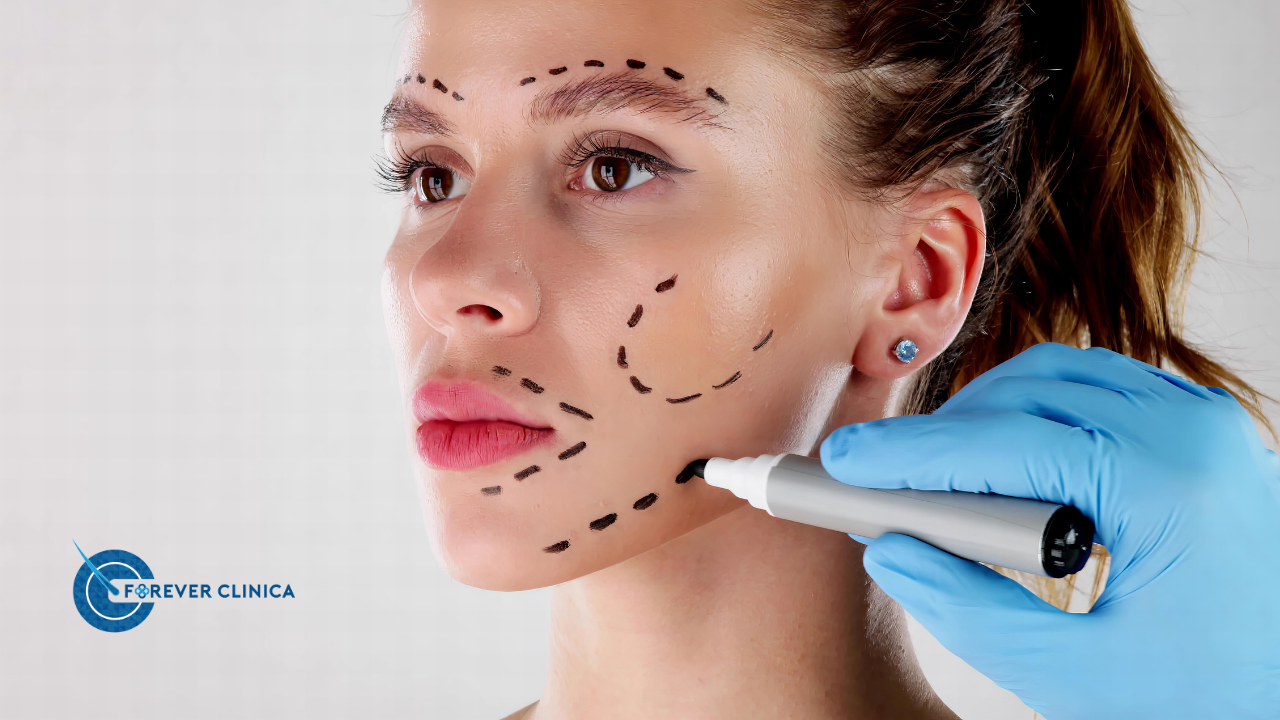
The Incision The surgeon makes strategic incisions hidden within the natural folds of the ear and the hairline. The goal is to make these marks “invisible” once they have healed.
Sculpting and Lifting Once the incisions are made, the surgeon repositions the deep muscle and fat tissues. Excess fat may be redistributed or removed, and the SMAS layer is tightened using internal sutures.
Closing the Incisions The skin is then gently redraped over the new, youthful contours. Any excess skin is meticulously trimmed away. The incisions are closed with fine sutures, and a soft compression garment is applied to minimize swelling.
Why Istanbul, Turkey is the World’s Choice for Facelifts
You might wonder why so many people travel across oceans to have their surgery at Forever Clinica in Istanbul. The reason is simple: Turkey has become the global epicenter of high-end plastic surgery.
Istanbul, Turkey offers a unique combination of world-class surgeons, state-of-the-art hospitals, and a level of patient care that is rare in the West. At Forever Clinica, we don’t just provide surgery; we provide a 5-star experience. From the moment you land, we handle your luxury transfers and accommodation, allowing you to focus entirely on your recovery and transformation.
Our surgeons handle thousands of cases annually, giving them an “artistic eye” and technical proficiency that is hard to find elsewhere. You aren’t just a patient here; you are a guest in a city that bridges the best of East and West.
The Recovery Journey: What to Expect
Recovery is a marathon, not a sprint. While everyone heals at their own pace, here is a general timeline:
The First 48 Hours: This is the peak of swelling. You might feel a “tightness” or a dull ache, but actual pain is usually quite low and easily managed with prescribed medication.
Week 1: Most of our patients stay in Istanbul during this time. We will see you for a follow-up to check the incisions and remove any drains. You’ll start to feel more like yourself, though you will still be quite swollen.
Week 2: Bruising typically fades to a yellowish hue and can often be covered with light makeup. Many people feel comfortable returning to remote work or social outings by the end of this week.
Month 1: About 80% of the swelling is gone. You will start to see the “real” results, and your incisions will begin to flatten and fade.
6 Months to 1 Year: The final refinement takes place. Your scars will turn into fine, white lines that are nearly impossible to see, and the tissues will have fully settled into their new, rejuvenated position.
Combining Procedures for a Total Transformation
A facelift addresses the lower face and neck, but aging often happens everywhere. To achieve a harmonious look, many of our patients choose to combine their facelift with:
Blepharoplasty (Eyelid Surgery): To remove “bags” under the eyes and sagging upper lids.
Fat Grafting: We take your own fat (usually from the abdomen) and inject it into the temples or cheeks to restore lost volume.
Neck Lift: Essential for those with significant “banding” or loose skin under the chin.
Laser Resurfacing: To improve the actual texture and “glow” of the skin surface.
Safety and Risks
We believe in being honest with our patients. No surgery is without risk. Potential complications include hematoma (blood collection under the skin), infection, or temporary numbness. However, when you choose a board-certified surgeon in a sterile, modern facility like Forever Clinica, these risks are extremely low.
The biggest factor in a successful recovery is you. We strictly advise all our patients to stop smoking at least three weeks before and after surgery, as nicotine restricts blood flow and can severely impact the healing of the skin.
Common Myths About Facelifts
“I will look like a different person.” Not at all. A successful facelift makes you look like a younger version of you. Your friends should think you’ve been on a long vacation or started a new health regime—not that you’ve had surgery.
“Fillers can replace a facelift.” Fillers are great for volume, but they cannot lift sagging skin. If you try to “fix” a sagging face with too much filler, you end up with “pillow face”—a bloated, unnatural look. A facelift is the only way to truly reposition tissue.
“Facelifts are only for women.” Actually, male facelifts are one of the fastest-growing trends in Turkey. Men often seek to restore a sharp, masculine jawline, and our techniques are adapted to preserve their natural features and beard lines.
Frequently Asked Questions (FAQ)
1. How long does a facelift last? A well-performed facelift “turns back the clock” by about 10 to 15 years. While you will continue to age naturally, you will always look significantly younger than you would have without the surgery.
2. Are the scars visible? Once healed, the scars are very discreet. They are hidden in the hair and the natural folds of the ear. Most people won’t notice them unless they are looking for them with a magnifying glass.
3. Is it painful? Surprisingly, most patients describe the feeling as “uncomfortable” or “tight” rather than painful. Most people stop taking pain medication after the first 3 or 4 days.
4. Why is a facelift in Turkey more affordable? It isn’t because of lower quality. It is due to lower labor costs, favorable exchange rates, and a high volume of medical tourism that allows clinics like ours to offer competitive pricing without sacrificing luxury or safety.
5. Can I travel back home right after surgery? We recommend staying in Istanbul, Turkey for at least 7 to 10 days post-surgery. This allows us to monitor your initial healing and ensures you are safe to fly.
6. Will I lose my facial expressions? No. Modern techniques like the Deep Plane Facelift work beneath the muscles of expression. Your smile and your ability to show emotion will remain exactly the same—only your skin will be smoother.
A New Chapter of Confidence
A facelift is more than just a cosmetic change; it is an emotional one. We see it in the way our patients carry themselves after they heal—they walk taller, they smile more, and they feel a renewed sense of confidence in their social and professional lives.
At Forever Clinica, our mission is to provide you with a safe, luxurious, and life-changing experience in the heart of Istanbul. If you are ready to rediscover the most vibrant version of yourself, we are here to guide you through every step of that journey.
ℹ️ Results may vary from person to person for every surgical or interventional procedure. It is recommended that you obtain detailed information from your physician before the procedure.