Looking in the mirror and seeing your new hairline for the first time feels like turning a brand-new page in your life. The operation is over, and you’ve made it through the most technical part; however, you are now entering the most critical phase where those precious roots (grafts) need to anchor themselves firmly and the scabs need to shed healthily. The first 10 days after a hair transplant is a “golden window” that determines the future of your hair.
At Forever Clinica, we treat every transplant performed in the heart of Istanbul as a masterpiece entrusted to the patient. Protecting this trust requires patience and the right care techniques. Let’s examine this sensitive 10-day journey day by day, rule by rule, with the depth and detail your new investment deserves.
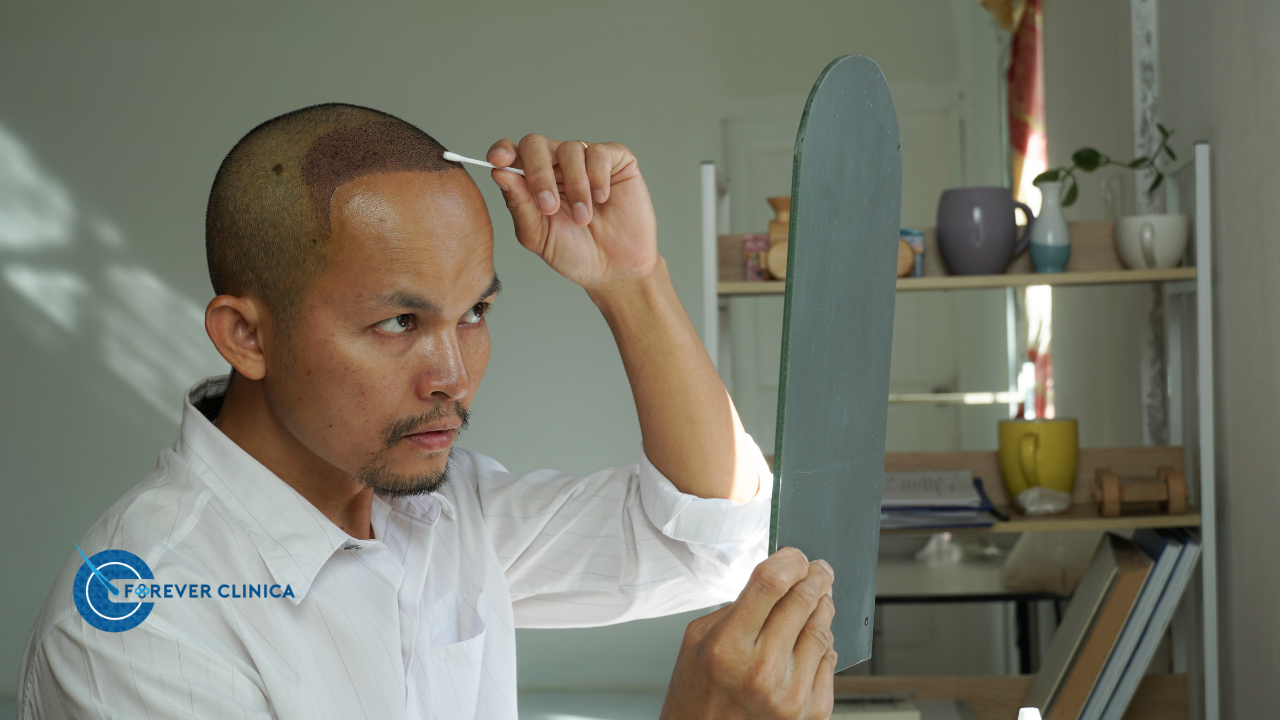
The First Three Days: The Biological Anchor
The first 72 hours following the operation is the period when the grafts are biologically trying to “anchor” themselves into the new channels where they were transplanted. During this time, the follicles are as delicate as a newborn. They aren’t fully connected to your blood circulation yet; they are simply surviving on the fluids from the surrounding tissues.
Many of our patients ask, “What happens if I just touch my head?” Think of it this way: you’ve just planted a new sapling in the soil and given it its first water. If you constantly shake that sapling or move it from its place, the roots will never take hold and it will eventually dry out. Your grafts are in the exact same situation. For the first three days, touching the transplanted area is strictly forbidden. Scratching, poking, or even accidentally bumping it can cause the grafts to pop out.
“The success of a hair transplant is 50% surgical skill and 50% the patient’s meticulous care during the first 10 days. A single graft moving out of place means that specific spot may never grow hair again.”
While we sleep, we might unconsciously move our hands to our heads or rub against the pillow. To reduce this risk to zero, using the neck pillow we recommend is not just a suggestion—it is a necessity. Sleeping on your back at a 45-degree angle both reduces the edema (swelling) that may occur on your face and protects the transplanted area from pillow contact. While you are staying in the historical atmosphere of Istanbul, remember that these small details create big differences.
The Art of Washing: Professional Touch and the First Contact
Approximately 48 hours after the operation, usually on the 2nd or 3rd day, the famous “first wash” day arrives. If you are in Istanbul, we prefer to perform this first wash with our professional teams at Forever Clinica. This is not just a cleaning; it is a training session where we teach you the care you will perform at home.
When you transition to the home washing process, you must act like a “wound care specialist.” What you need is the special lotion we provided, the clinical shampoo, and a good amount of patience.
Lotion Application and the Softening Process: You must apply the softening lotion to the transplanted area by “dabbing” it with your fingertips. You should never rub or friction the area. The purpose of the lotion is to soften the dried blood and tissue fluids, namely the scabs, formed after the operation. Waiting for 30–45 minutes after applying the lotion allows the scabs to soften thoroughly. This waiting period is the most important part of the wash.
The Intricacies of Rinsing: The water you use to clean off the lotion should be neither too hot nor too cold. Lukewarm water is ideal. However, the most critical point is the water pressure. Pressurized water coming directly from the showerhead can act like a sledgehammer on your roots. You should either pour the water gently using a bowl or keep the showerhead at a very low pressure from a distance.
Shampooing and Drying: Do not pour the shampoo directly onto your scalp and try to lather it there. Lather it in your hands first and apply this foam to the transplanted area using the “pat-dry” (dab and lift) technique. Never move your fingers in a horizontal rubbing motion. When drying, the harsh fibers of classic towels can snag and pull out the grafts. Use a paper towel instead; just press it down lightly to absorb the moisture or let your hair dry naturally at room temperature.
Days 4 to 7: The Itch and the Test of Patience
You will feel much more refreshed after the first wash. However, around the 4th day, a new guest might knock on your door: itching. This itch is actually good news; it shows that your skin is healing and the nerve endings are repairing themselves. But at this point, your patience will face its biggest test.
Nailing or scratching the transplanted area can lead to permanent loss of those roots and a risk of infection. To alleviate the itch, you can use the moisturizing sprays we gave you or, with your doctor’s approval, apply a cold compress to the forehead or donor area (not directly on the grafts). The cool air of Istanbul can sometimes help with this, but you must remember to protect the transplanted area from direct harsh wind and sunlight.
“A healing tissue itches, but the winners are those who do not scratch. Patience is as much a part of a hair transplant as the surgery itself.”
During this period, your overall body health also affects the survival rate of your grafts. Drinking plenty of water helps your skin maintain its moisture balance and flush out toxins. Additionally, staying away from smoking and alcohol increases the amount of oxygen in your blood, allowing the roots to be better nourished. At Forever Clinica, we recommend paying attention to your nutrition during this first week, focusing on protein and vitamin-rich foods.
Days 8 to 10: The Scab Shedding Marathon
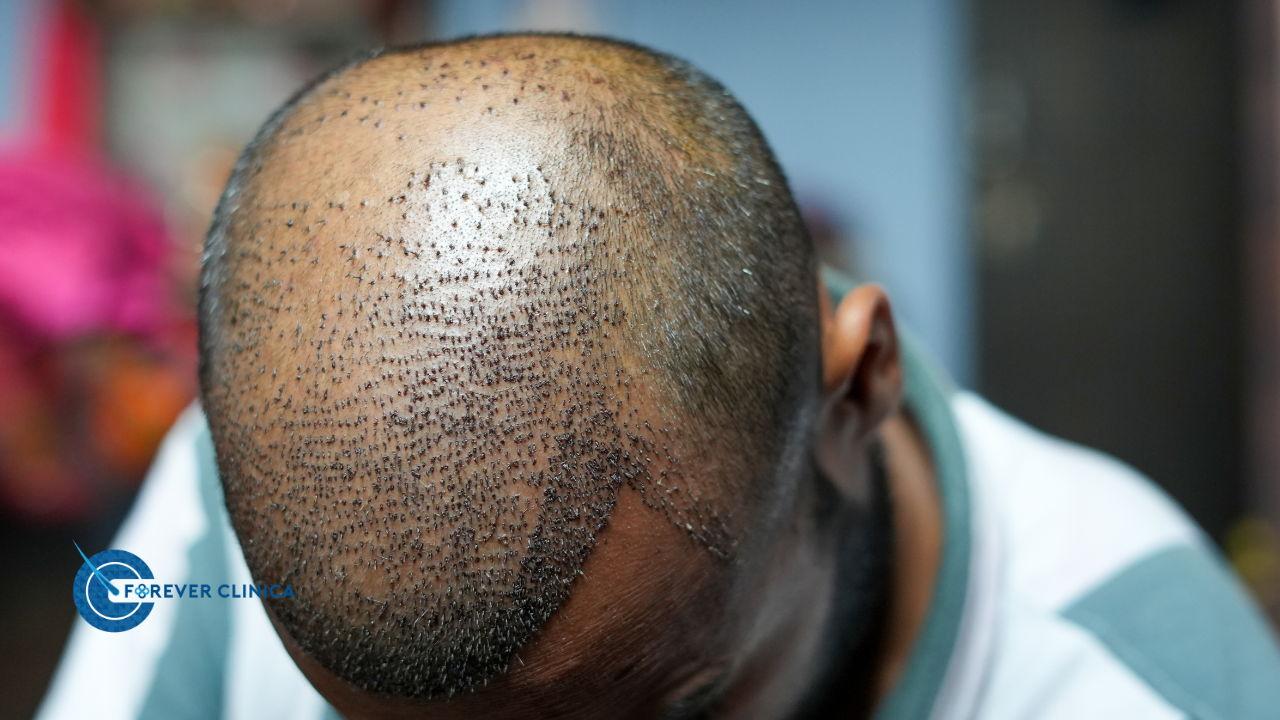
And we have reached the finale of the 10-day process. From the 7th or 8th day onwards, those small dots in the transplant area—the scabs—become very prominent. These scabs are actually healing wound sites. However, the goal is for these scabs to be completely shed by the 10th day. Why? Because if the scabs stay there too long, they can prevent the scalp from breathing and make it difficult for the new hair shafts to emerge.
How Will We Shed the Scabs? From the 8th day, we make a small change in your washing routine. We no longer just “dab and lift”; we start circular massages with the fleshy part of your fingertips using very light pressure. The scabs, which have been thoroughly softened by the lotion, will begin to fall off one by one with this massage.
If you still have heavy scabbing by the 10th day, it means you need to slightly increase the pressure during washing. Don’t be afraid; by the 10th day, the grafts are firmly in place and will not come out with a gentle massage. Seeing those tiny, stiff hair shafts emerging from under the shed scabs will be the greatest reward for your 10 days of effort.
Golden Rules for Graft Survival
A hair transplant is not just a procedure; it is an investment. To protect this investment, you must etch these “golden prohibitions” into your mind for the first 10 days:
Sunlight: Direct sunlight can damage the healing tissue. Wear the wide-brimmed hat we provided when going outside.
Sweat and Exercise: Don’t rush back to the gym. Sweating can cause bacteria to form around the transplanted roots and lead to infection. You should wait at least one month for heavy exercises.
Dusty and Dirty Environments: Construction sites, dusty streets, or smoky environments can harm the transplant area. Stay in sterile and clean environments as much as possible.
Sexual Activity: Avoiding activities that increase blood pressure (including sexual intercourse) for the first 3–5 days post-op is recommended for the healthy attachment of the grafts.
Hair Transplant in Istanbul: Why Forever Clinica?
Why do tens of thousands of people from all over the world, especially from the UK, Germany, and the Middle East, choose Istanbul, Turkey for hair transplants? It’s not a coincidence. Turkey, and specifically Istanbul, is home to the world’s most experienced surgeons and the most advanced technologies in this field. At Forever Clinica, we are proud to be a part of this global success.
For us, the process doesn’t just end in the operating room. Beyond the VIP transfers and luxury accommodation we offer our international guests, we create the real difference in the “follow-up” process. During the critical first 10 days after the hair transplant, we monitor every washing step through the photos you send via WhatsApp and professionally supervise your scab-shedding process. We work to make you feel like both a tourist in the heart of Istanbul and a VIP receiving the highest level of medical service.
Frequently Asked Questions (FAQ)
1. Is it normal for hair shafts to come out with the scabs? Yes, this is perfectly normal. During the scab-shedding process, you might see some hair shafts breaking and falling off with the scab. Do not worry; this is not the root of the hair, but just the shaft part that stays outside. The root remains safely inside.
2. I’ve reached the 10th day but I still have scabs, what should I do? If there is still heavy scabbing on the 10th day, you may need to increase the intensity of the massage you apply during washing. Wash with a bit more pressure using the circular motions of your fingertips without using your nails. If necessary, send a photo to our clinic to get approval from our experts.
3. When can I wear my normal hats? For hats that come into direct contact with the transplant area, like baseball caps or winter beanies, you should wait at least 14 days, preferably one month. For the first 10 days, only use the protective hat provided by our clinic, which has a hard and high top.
4. Can I go outside during the first 10 days? Of course. However, there is no harm in going out as long as you are protected from the sun, dust, and impacts. if you want to enjoy Istanbul, we recommend avoiding the hours when the sun is most direct and taking extra care not to bump your head in crowded places.
5. Do all the transplanted hairs survive? With the right technique and meticulous care, 90–95% of the transplanted hairs survive. However, this rate is directly related to how well you follow the washing and protection rules in the first 10 days.
6. How does smoking affect the result after a hair transplant? Smoking narrows the blood vessels and reduces the amount of oxygen reaching the scalp. This makes it difficult for the roots to be nourished and can lower the survival rate. If possible, you should stay away from smoking one week before and one week after the operation.
Conclusion: Patience, Care, and a New Look
The first 10 days after a hair transplant is truly a journey of patience. The sacrifices you make in this short time are the guarantee of natural and thick hair that you will carry for a lifetime. As the Forever Clinica family, we are here to make this process as comfortable and safe as possible for you in the center of Istanbul. Watching your reflection in the mirror grow more beautiful every day is our greatest source of happiness.
Remember; your new hair will grow not just on your scalp, but in your self-confidence as well. When you pass this process with professional support and by following the rules, you will say to yourself a year from now, “I’m so glad I took this step.”
ℹ️ Results may vary from person to person for every surgical or interventional procedure. It is recommended that you obtain detailed information from your physician before the procedure.