What Exactly Are Broken Capillaries?
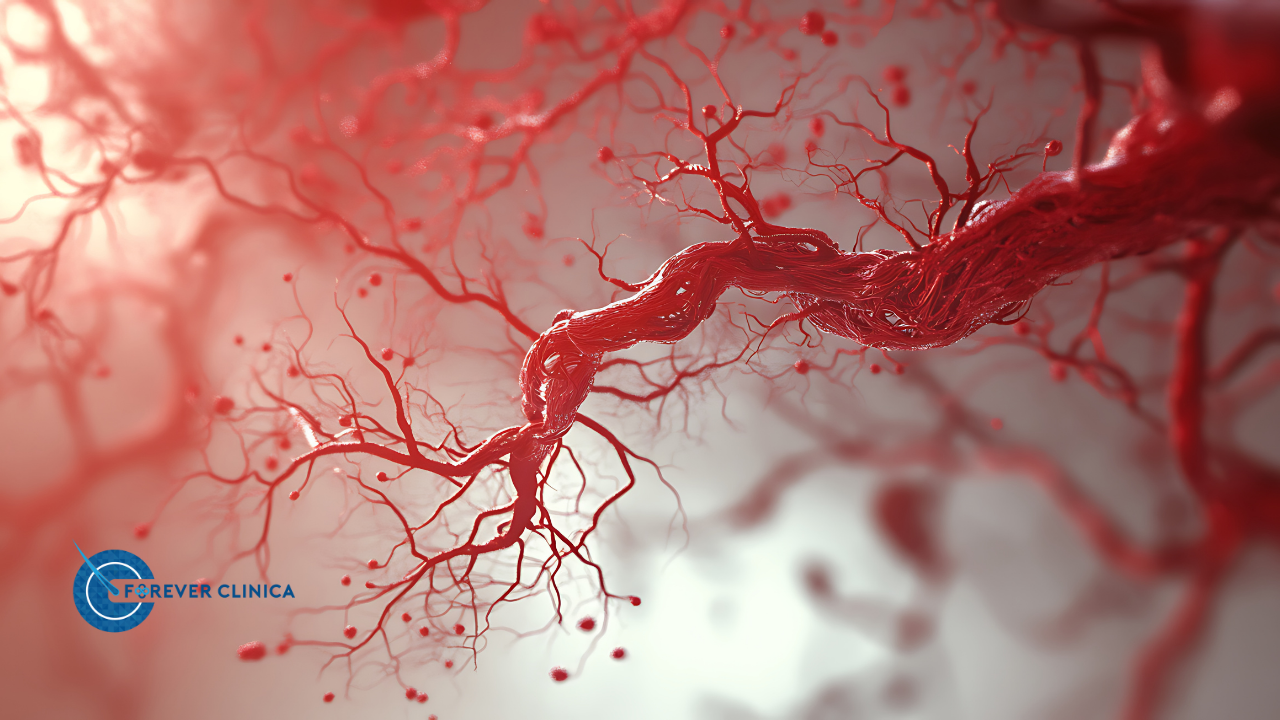
Capillaries are the smallest, most delicate blood vessels in your body. They are located just beneath the surface of the skin and are responsible for delivering oxygen and nutrients to your tissues. Normally, they are so thin that they are invisible to the naked eye. However, when these vessels lose their elasticity, they remain filled with blood and become visible through the outer layer of the skin.
Think of a capillary like a balloon. When you blow up a balloon and let the air out, it usually returns to its original shape. But if you over-inflate it or blow it up too many times, the rubber loses its “snap” and stays stretched out. This is exactly what happens to your capillaries. Once they stay dilated for a long period, they cannot shrink back on their own. This is why professional intervention—an “expert touch”—is necessary to clear them.
Why Do Broken Capillaries Occur?
One of the most frequent questions we hear at our clinic in Istanbul is, “Why me?” There is rarely a single reason; rather, it is usually a combination of several factors that trigger this vascular response:
1. The Genetic Blueprint If your parents or grandparents had visible capillaries or persistent facial redness, there is a high probability you will too. The thickness of your skin and the inherent strength of your vessel walls are traits passed down through generations.
2. Silent Damage from the Sun UV rays are perhaps the biggest enemy of healthy skin. Over time, sun exposure breaks down the collagen and elastin fibers that provide structure to your skin. When this supporting structure weakens, the vessels lose their “casing,” allowing them to expand and become visible. Years of walking outside without high-SPF protection is an open invitation for capillary issues.
3. The Natural Process of Aging As we grow wiser, our skin grows thinner. The thick, plump layer of dermis that once hid our vascular network begins to thin out, making the underlying vessels appear closer to the surface. It is a natural part of life, but one that can be managed with modern aesthetics.
4. Hormonal Fluctuations Hormones play a massive role in vascular health. During pregnancy, puberty, or menopause, the body undergoes significant hormonal shifts. Increased estrogen levels, in particular, are known to relax the walls of the blood vessels, making them more prone to dilation.
5. Rosacea (The “Butterfly” Disease) Rosacea is a chronic skin condition characterized by facial flushing and persistent redness. For those living with rosacea, broken capillaries are one of the most prominent symptoms. In these cases, treatment is not just about aesthetics; it is a medical necessity to manage the condition’s progression.
6. Lifestyle and Environmental Stressors
Alcohol Consumption: Alcohol acts as a vasodilator, meaning it causes blood vessels to widen temporarily. Frequent “flushing” from alcohol can eventually lead to permanent dilation.
Extreme Temperature Changes: Moving quickly from a hot sauna to a freezing cold pool can shock the vessels.
Harsh Skincare: Over-exfoliating or using steroid-based creams for too long can thin the skin and expose capillaries.
Facial Capillaries vs. Body Capillaries: What’s the Difference?
While broken capillaries can appear anywhere, they behave differently depending on where they are located:
The Face: Usually found on the sides of the nose, cheeks, and chin. They are often triggered by sun damage or rosacea and are treated with highly precise, gentle lasers.
The Legs: Often referred to as “spider veins.” These are frequently related to gravity, long periods of standing, or the early stages of varicose veins. Because the pressure in the legs is higher, the vessels are often thicker and may require different treatments like sclerotherapy.
Advanced Treatment Methods: The Path to Clear Skin
Modern medicine has evolved to the point where no one has to simply “live with” red facial veins. At Forever Clinica’s state-of-the-art center in Istanbul, Turkey, we utilize the most effective technologies to eliminate these concerns.
Laser Therapy (The Gold Standard) Laser is currently the most effective way to treat broken capillaries. The laser light is absorbed by the hemoglobin (the red pigment) in the blood vessel. This energy turns into heat, causing the vessel to collapse and seal shut. Over the following weeks, your body naturally absorbs the closed vessel, leaving the skin clear.
ND:YAG Laser: Excellent for deeper, thicker vessels.
Pulsed Dye Laser (PDL): The preferred choice for superficial redness and fine “spider” veins on the face.
IPL (Intense Pulsed Light) While not technically a laser, IPL uses a broad spectrum of light to target redness. It is an excellent option for patients who have widespread redness and uneven skin tone rather than just isolated vessels.
Radiofrequency (RF) Treatment In this method, a very fine needle-like tip delivers heat energy directly into the vessel. It is highly effective for pinpoint treatments of very small, specific capillaries.
Why Choose Istanbul for Your Treatment?
Turkey, and specifically Istanbul, has become a global beacon for dermatology and aesthetic medicine. But why? The answer lies in the sheer volume of experience. Our specialists encounter a vast diversity of skin types and vascular conditions every day, honing their skills to perfection.
At Forever Clinica, we provide a world-class health tourism experience. Many of our guests from Europe, the Middle East, and beyond visit us to enjoy the historic beauty of the Bosphorus, taking advantage of a “lunchtime treatment” to clear their skin before heading out to explore the city. The combination of world-class medical luxury and Istanbul’s cultural richness makes this more than just a medical appointment—it’s a journey toward self-confidence.
Common Myths About Broken Capillaries
“Topical creams can make them disappear.” Unfortunately, this is a myth. While some creams can soothe redness or strengthen the skin barrier to prevent new ones, they cannot physically close a vessel that is already dilated. Only light or heat-based treatments can do that.
“The treatment is incredibly painful.” Actually, modern lasers come with powerful cooling systems. Most patients describe the sensation as a tiny rubber band snapping against the skin—it is very manageable and quick.
“Only elderly people get them.” False. We often treat patients in their 20s who have a genetic predisposition or have spent too much time in the sun without protection.
How to Prevent Future “Broken” Veins
If you are prone to redness, you can slow down the process with a few lifestyle adjustments:
Sunscreen is Non-Negotiable: Use a broad-spectrum SPF 50 every single day, even in the winter.
Be Gentle: Avoid washing your face with very hot water. Lukewarm is best.
Cool Down: If you enjoy saunas or hot yoga, try to mist your face with cool water afterward to help vessels constrict.
Vitamin C: Incorporate Vitamin C into your diet and skincare to help strengthen the vessel walls and boost collagen.
Frequently Asked Questions (FAQ)
1. How many sessions will I need? Depending on the thickness and extent of the vessels, most patients see significant results in 1 to 3 sessions.
2. Will there be scars after the treatment? When performed by experts at Forever Clinica, there is no permanent scarring. You may experience slight redness or tiny scabs for a few days, but these heal quickly to reveal clear skin.
3. Do the vessels come back? The vessels we treat are closed forever and will not return. However, if you don’t protect your skin from the sun, your body may develop new dilated capillaries in other areas.
4. Can I get treated in the summer? While it is generally preferred to do laser treatments in the autumn or winter when sun exposure is lower, it can be done in the summer if you are extremely diligent about using sunblock and wearing a hat.
5. Are broken capillaries on the legs the same as varicose veins? Not necessarily. Broken capillaries (spider veins) are superficial, while varicose veins are deeper and larger. However, spider veins on the legs can sometimes be a sign of underlying venous insufficiency, so a consultation is always recommended.
Why Forever Clinica?
Treating broken capillaries may seem like a simple cosmetic fix, but it requires deep medical knowledge. The wrong laser setting can lead to skin burns or pigmentation issues. At Forever Clinica, we promise more than just a treatment; we promise safety, sterile environments, and the expertise of seasoned physicians in the heart of Istanbul. Let us give your skin the care and clarity it deserves.