What Is Temple Filler? How Is It Done?
There are some changes in the face that we notice immediately, yet we may not know exactly how to describe them. A person may look in the mirror and say, “My face looks tired,” “My eye area seems hollow,” “My cheekbones do not look as balanced as before,” or “There is a sunken look on the sides of my forehead.”
In many cases, these observations are related to one often-overlooked area: the temples.
The temple area is one of the quietest but most influential regions of the face. It may not attract attention as quickly as the lips, nose, or cheeks, yet it plays an important role in how youthful, balanced, and rested the face appears. When volume loss occurs in this area, the face may look more tired, sharper, older, or more hollow than the person actually feels.
So, what exactly is temple filler? Is it needed for every hollow temple? How is it performed, how long does it take, and is the result permanent? Let’s examine the topic in a clear, realistic, and patient-friendly way.
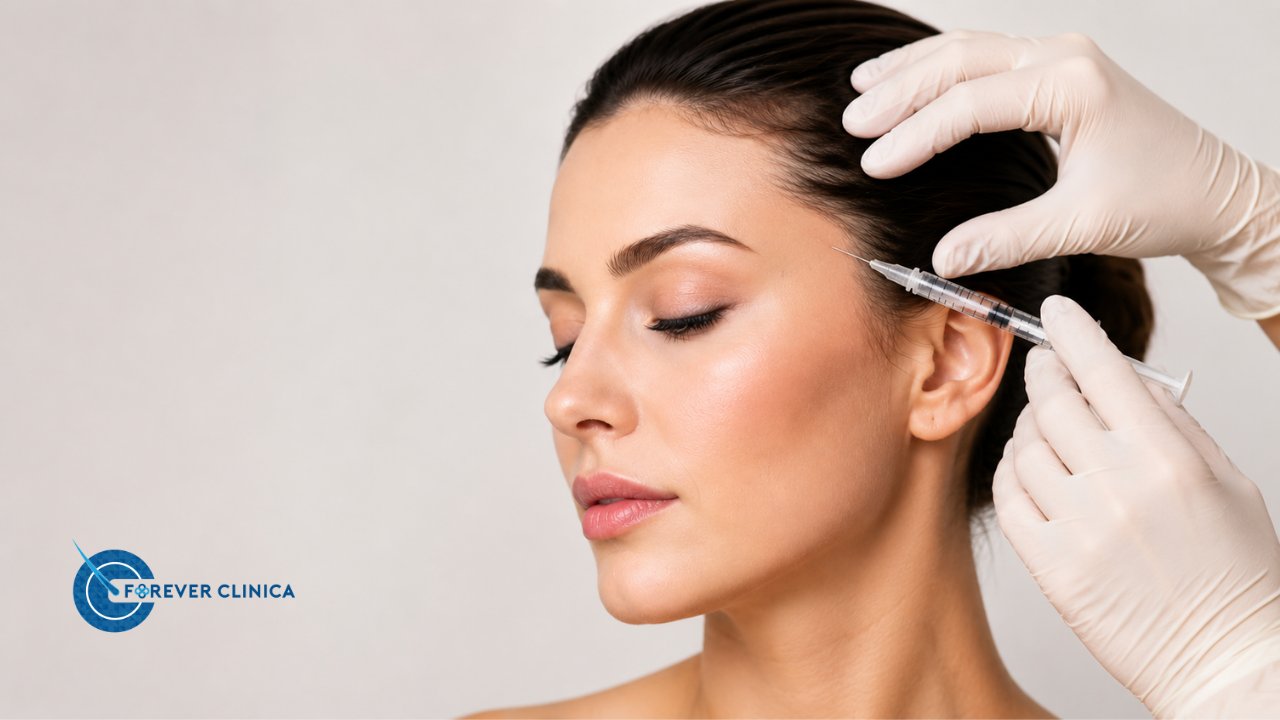
What Is Temple Filler?
Temple filler is a non-surgical medical aesthetic procedure used to support volume loss in the temple area, which is located on the upper side of the face. In this procedure, hyaluronic acid-based fillers or other filler materials deemed appropriate by the physician may be used.
The temple area is located between the outer edge of the eyebrow and the hairline. In younger facial anatomy, this area usually appears fuller and has a softer transition between the forehead, eye area, and cheekbone. However, due to aging, genetic structure, weight loss, facial anatomy, intense exercise, or changes in connective tissue, the temples may gradually appear more hollow.
The goal of temple filler is not to change the face in an artificial way. The main aim is to provide controlled volume support and create a smoother transition between the upper and mid-face. This is why temple filler should never be seen as a standard procedure performed in the same way for everyone.
For some people, a very subtle amount of support may be enough. For others, a more detailed facial assessment may be necessary. In some cases, the issue may not be limited to the temple area alone; the cheekbones, eye area, brow support, and mid-face volume may also need to be evaluated together.
Why Does the Temple Area Affect Facial Expression So Much?
Think of the temple area as the side support of a building. At first glance, it may not seem like the most noticeable part. But when that side support weakens, the entire structure may look different.
The same idea applies to the face.
When the temples lose volume, the outer part of the eyebrow may appear less supported. The eye area may look more tired. A sharper transition may appear between the forehead and cheekbone. The upper face may look narrower, while the lower face may appear heavier or more dominant.
Many people describe this as, “My face looks thinner, but not in a healthy way.” In reality, the issue is not simply thinness. It is often related to changes in the distribution of facial volume.
This can become more visible in photos. When light falls into the hollow temple area, shadowing may increase. This shadow can make the face appear tired, aged, or less balanced.
Why Does Temple Hollowing Occur?
There is not a single reason for temple hollowing. In most cases, several factors work together.
Aging
With age, changes occur in facial fat pads, bone structure, muscles, and connective tissue. Skin elasticity may decrease, and volume loss may become more visible in certain facial regions. The temple area is one of the areas that may be affected by this process.
This does not happen at the same speed for everyone. In some people, temple hollowing may become visible in their 30s. In others, it may appear later.
Genetic Facial Structure
Some people naturally have a more hollow temple area. This may not be related to aging at all. A person may have a naturally thin, angular, or bony facial structure from a young age.
Genetics plays an important role here. If similar facial features are present in family members, temple hollowing may be noticed earlier.
Rapid Weight Loss
Losing weight in a short period of time can affect facial volume. The cheeks, under-eye area, and temples may show this change more clearly.
After weight loss, the body may look fitter, yet the face may appear more tired or hollow. This can be especially noticeable in people who already have a naturally thin face.
Intense Exercise and Low Body Fat
Regular exercise is a healthy habit, but very low body fat may make facial volume loss more visible in some individuals. People with lean facial structures may notice sharper lines around the temples and cheeks.
This does not mean that every volume loss is a “problem.” The person’s expectations, facial proportions, and physician evaluation should be considered together.
Jaw Clenching and Prominent Jaw Muscles
In some people, prominent masseter muscles may make the lower face appear stronger or wider. When the lower face becomes visually dominant, the upper face may seem narrower or more hollow.
In such cases, a person may think the problem is only in the temple area. However, the entire face should be evaluated before making a treatment plan.
What Is Temple Filler Used For?
Temple filler is mainly planned to support volume loss. However, this support may create a visual effect in different parts of the face.
Softening Temple Hollowing
The primary goal is to soften the hollow or sunken appearance in the temple area. With filler, controlled volume support can be provided to the region.
This may help reduce shadowing on the upper side of the face. As a result, the face may appear more rested and balanced.
Supporting the Outer Brow Area
The temple area is closely related to the outer part of the eyebrow. Therefore, temple support may contribute to a more balanced appearance around the brow area in some individuals.
However, this point must be clear: temple filler is not a brow lift procedure. It may indirectly affect the appearance around the brow by supporting volume loss, but it does not replace surgical or non-surgical brow lifting methods.
Creating a Smoother Transition Between the Upper and Mid-Face
The temple is a transition zone between the forehead, eye area, and cheekbone. When hollowing occurs in this region, facial contours may look sharper or more tired.
The goal of filler treatment is to soften this transition in a natural-looking way. A well-planned temple filler should not make people say, “You had filler.” Ideally, it should create the impression of a more rested and balanced face.
Supporting Facial Proportion
Focusing on only one part of the face can sometimes be misleading. When the temple area loses volume, the lower face may appear visually heavier. This can create a sense of imbalance in facial proportions.
In suitable individuals, temple filler may be considered to support the upper face and contribute to a more harmonious overall appearance.
How Is Temple Filler Performed?
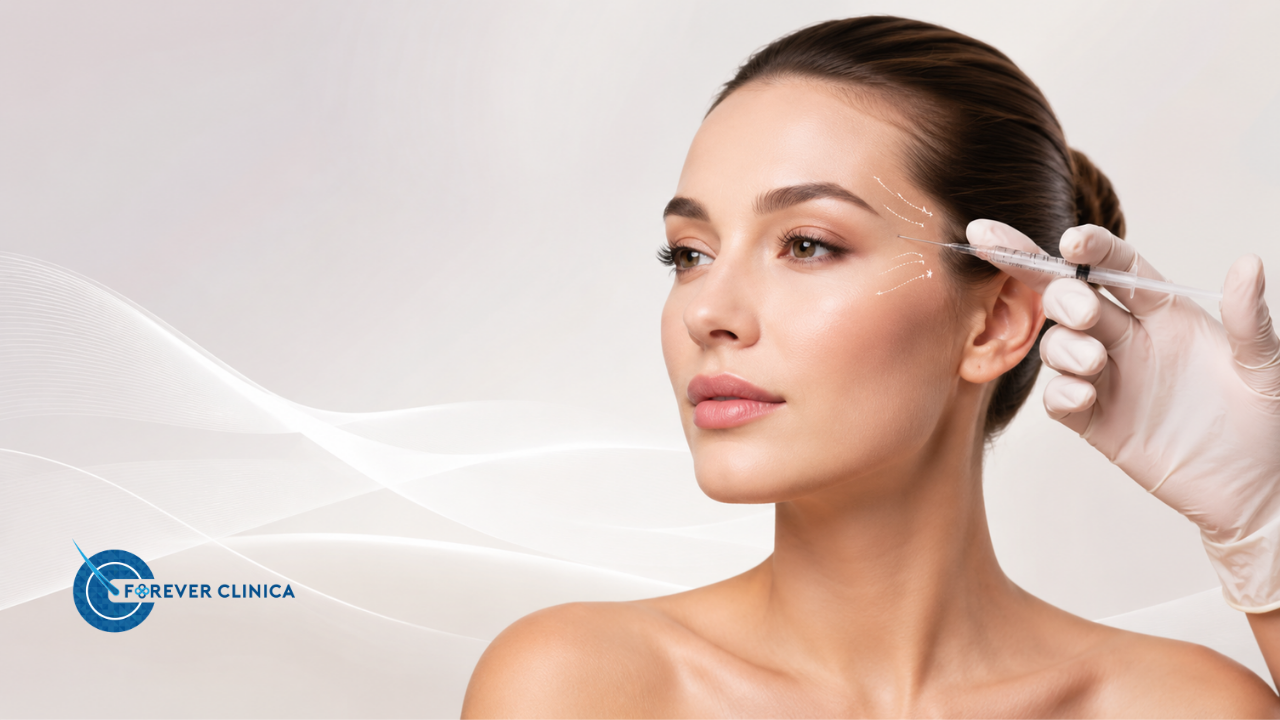
Temple filler is an injection-based medical aesthetic procedure planned after a physician’s assessment. Before the treatment, the person’s facial anatomy, degree of temple hollowing, skin quality, vascular risk areas, previous procedures, and expectations should be evaluated.
Filler procedures are often completed in a relatively short time. However, the fact that a procedure is quick does not mean it is simple or unimportant. The temple region is anatomically sensitive and requires careful planning.
This is why temple filler should be performed by qualified healthcare professionals in appropriate clinical conditions.
Initial Consultation and Facial Analysis
The first step is facial analysis. The physician does not evaluate only the temple area. The forehead, eyebrows, eye area, cheekbones, cheeks, jawline, and overall facial proportions should be assessed together.
The person’s expectation is also important. Some people want a visible change, while others prefer a very subtle improvement in tired appearance. A healthy treatment plan starts with understanding whether the expectation is realistic.
Preparing the Treatment Area
Before the procedure, the treatment area is cleaned. If needed, a topical anesthetic cream may be applied. Some filler products also contain local anesthetic agents, which may increase comfort during the procedure.
Sterile conditions are very important. Injections performed without proper skin cleansing and clinical standards may increase the risk of infection.
Choosing the Filler Material
The filler material used in the temple area is selected according to the person’s needs. Hyaluronic acid-based fillers are among the commonly preferred options. Hyaluronic acid is a molecule naturally found in the body and is known for its water-binding properties.
However, not all hyaluronic acid fillers are the same. Their density, elasticity, lifting capacity, and tissue integration may differ. Product selection is especially important in an area like the temples, where deeper support may be required.
At this stage, the quality of the product matters, but the injection plan matters just as much. A good filler result is not created by the product alone. It depends on anatomy, technique, proportion, and a measured approach.
Needle or Cannula Technique
Temple filler may be applied with a needle or a cannula. The choice depends on the physician’s assessment, the person’s anatomy, and the treatment plan.
A cannula is a thin instrument with a blunt tip. In some cases, it may help the practitioner move more gently through the tissue. A needle may be preferred for more targeted placement in specific points.
It would not be correct to say that one technique is always better than the other. The safest and most appropriate approach should be determined according to individual anatomy.
Controlled Volume Placement
Using more filler does not always mean achieving a better result. In fact, the temple area may look unnatural if it is overfilled.
The general goal is to create a subtle and soft transition. For this reason, the physician may plan the procedure gradually. In some people, one session may be sufficient, while in others, a controlled touch-up may be considered later.
Is Temple Filler Painful?
This is one of the most common questions. Since the temple area is sensitive, a person may feel pressure, tightness, or mild discomfort during the procedure. However, many people describe the sensation as tolerable.
Topical anesthetic cream or anesthetic-containing filler products may improve comfort. Still, pain tolerance varies from person to person. Some individuals feel very little discomfort, while others may experience temporary sensitivity.
In many cases, uncertainty creates more anxiety than the procedure itself. When the physician clearly explains the process, the patient often feels more comfortable.
Who May Be Suitable for Temple Filler?
Temple filler may be considered for individuals who have volume loss or hollowing in the temple area. However, suitability should not be decided only by looking in the mirror.
People with Visible Temple Hollowing
People with inward hollowing, shadowing, or a bony appearance in the temples may be evaluated for this procedure. If this appearance affects overall facial balance, filler may be discussed as an option.
People Concerned About a Tired Facial Expression
Some people look tired even when they are well-rested. The reason may not only be under-eye darkness. Temple and mid-face volume loss may also contribute to this tired appearance.
In such cases, temple filler may be evaluated alone or together with other supportive procedures.
People Seeking Softer Facial Transitions
A deep temple hollow may create a sharp transition between the forehead and cheekbone. People who want a softer facial transition may be suitable candidates after medical evaluation.
People with Facial Volume Loss After Weight Loss
After rapid weight loss, volume loss may appear in the upper side of the face. A person may be happy with their overall body change but may wish to balance facial hollowing.
In such cases, treatment should ideally be evaluated after the person’s weight has stabilized. Ongoing rapid weight changes may affect aesthetic planning.
Who May Not Be Suitable for Temple Filler?
Like all medical aesthetic procedures, temple filler is not suitable for everyone. This is especially important because some procedures can look very simple on social media. In reality, the person’s health condition, medication use, and medical history must be considered.
Filler procedures are generally postponed during pregnancy and breastfeeding. Active infection, skin problems in the treatment area, known hypersensitivity to filler ingredients, uncontrolled systemic diseases, or bleeding disorders may make the procedure unsuitable.
People who use blood-thinning medication may have a higher risk of bruising or bleeding. These medications should never be stopped without medical advice.
People who previously had facial fillers should also inform the physician about the product used and the date of application. Previous filler material may affect the new treatment plan.
When Does Temple Filler Show Its Effect?
With hyaluronic acid-based fillers, volume support may often be noticed immediately after the procedure. However, mild swelling, tenderness, or edema may occur, so the final appearance should not be judged right away.
In the first few days, the area may feel slightly fuller. As swelling decreases, the result begins to settle. This process varies from person to person.
Some people may say, “It looked fuller on the first day, then it decreased a little.” This is often related to early swelling going down. For this reason, a follow-up appointment is useful for evaluating the real outcome.
How Long Does Temple Filler Last?
The longevity of temple filler may vary depending on the filler material, metabolism, age, lifestyle, amount used, and the structure of the treatment area. Hyaluronic acid-based fillers are temporary.
In some people, the effect may last longer. In others, it may decrease sooner. Intense exercise, fast metabolism, weight changes, and tissue characteristics may influence duration.
Realistic expectations are important. Filler procedures should not be considered permanent transformations. Follow-up and possible maintenance can be planned according to the person’s needs and the physician’s evaluation.
Does Temple Filler Look Natural?
A well-planned temple filler can look natural. In many cases, people around the patient may not say, “You had filler.” Instead, they may simply notice that the face looks more rested or balanced.
The key to a natural result is proper patient selection, correct product choice, appropriate amount, and accurate injection planning. If the temple area is overfilled, the face may look swollen or artificial.
Sometimes, when a physician says, “Let’s not add more filler to this area,” that is actually a good sign. In aesthetics, knowing where to stop is just as important as knowing how to perform the procedure.
What Should Be Considered After Temple Filler?
Post-procedure instructions may vary depending on the physician’s recommendations. In general, pressure on the treated area should be avoided during the early period. The area should not be rubbed or massaged unless the physician specifically advises it.
Heavy exercise, sauna, steam rooms, intense sun exposure, and solarium may be avoided for the first 24 hours, depending on the physician’s instructions. Mild swelling or bruising may occur and is often temporary.
However, unexpected severe pain, skin discoloration, paleness, intense bruising, visual changes, or significant tenderness may require urgent medical evaluation. Although serious complications are rare, they are not impossible.
Are There Risks of Temple Filler?
Yes. As with any injection procedure, temple filler has possible risks. Common temporary effects may include swelling, bruising, redness, tenderness, mild pain, or small bumps at the injection site.
Less commonly, asymmetry, nodules, infection, product palpability, or filler migration may occur. Very rare but serious complications may include vascular compromise, which can affect the skin or surrounding tissues.
For this reason, temple filler should not be viewed as a simple beauty treatment. Knowledge of facial anatomy, sterile technique, proper product selection, and complication management are all important.
Fillers purchased online, home applications, or procedures performed in uncontrolled environments may carry serious risks. Filler injections should be performed by qualified healthcare professionals in suitable clinical settings.
Is Temple Filler the Same as a Facelift?
No, temple filler is not the same as a facelift. Filler is used to support areas with volume loss. A facelift is a surgical procedure that addresses tissue laxity and sagging through a different approach.
People sometimes confuse fillers with surgical procedures because both can affect facial appearance. However, their mechanisms, techniques, recovery processes, and goals are different.
Temple filler is mostly considered for volume loss and transition irregularities. If there is significant skin laxity, advanced tissue sagging, or other anatomical concerns, different treatment options may need to be discussed.
Does Temple Filler Affect the Eye Area?
The temple area is anatomically close to the eye region. For this reason, supporting temple volume may help the eye area appear more balanced in some people. However, this effect varies from person to person.
Under-eye hollowing, eyelid position, brow position, and skin quality should be evaluated separately. Temple filler does not solve every concern around the eyes.
So, instead of thinking, “My eyes look tired, I need temple filler,” it is healthier to have a full facial assessment.
Temple Filler vs. Cheekbone Filler
Temple filler supports the upper side of the face, while cheekbone filler focuses on the mid-face. Although these areas are connected, their aesthetic effects are different.
Cheekbone filler may support mid-face projection. Temple filler may soften the transition between the forehead, outer brow, and upper cheekbone area.
In some individuals, both areas may be evaluated together. However, the goal should never be to simply “fill the face.” The goal is to understand proportion and support the face in a balanced way.
Can Men Have Temple Filler?
Yes, temple filler may also be considered for men. In male facial anatomy, the temple area works together with the forehead and jawline to create facial balance. However, planning for men may differ from planning for women.
In male faces, an overly soft or rounded upper-face appearance may not be desired. Therefore, product selection, filler amount, and the expected result should be carefully planned.
For men, the goal is usually a more rested, balanced, and healthy-looking facial expression. An artificial change is not the aim.
Temple Filler and Health Tourism in Istanbul, Turkey
Forever Clinica is a health tourism agency in Turkey that may support international patients with process planning and coordination. For patients traveling to Istanbul, Turkey, for medical aesthetic procedures, clear communication and realistic expectations are especially important.
Temple filler, like other injection-based aesthetic procedures, must be evaluated and performed by authorized physicians in appropriate healthcare settings. Forever Clinica may assist with organization, communication, planning, and travel-related support, while medical decisions and applications remain under the responsibility of qualified healthcare professionals.
For international patients, photo-based preliminary evaluation may provide an initial idea in some cases. However, a face-to-face medical assessment in Istanbul, Turkey, may still be necessary to evaluate anatomy, suitability, and treatment planning more accurately.
Travel planning should also consider the possibility of temporary swelling or bruising. Even though many people return to daily life quickly after filler procedures, each person’s healing response is different.
For patients coming from abroad, support with translation, appointment planning, accommodation, transfers, and follow-up coordination may make the process easier to understand. Still, the actual medical decision should always be based on the physician’s examination.
What Questions Should Be Asked Before Temple Filler?
Asking questions before a procedure is one of the healthiest ways to make an informed decision. Some people hesitate and wonder, “Would I be misunderstood if I ask too many questions?” In reality, questions are valuable in a responsible medical process.
Before temple filler, the following questions may be helpful:
“Do I really need filler in my temple area?”
“What type of filler material will be used?”
“At what depth and with which technique will the filler be applied?”
“Is there any anatomical risk in my case?”
“How soon can I return to social life after the procedure?”
“What should I do if an unexpected reaction occurs?”
“Could my previous aesthetic procedures affect this treatment?”
Clear answers to these questions may help the person feel more informed and comfortable.
What Should Realistic Expectations Be?
Temple filler should not be viewed as a procedure that completely changes the face. It is mainly used to support volume loss in the upper side of the face and soften facial transitions.
A realistic expectation may be a more balanced, rested, and smoother facial expression. However, results vary from person to person. Skin quality, bone structure, age, tissue response, and treatment planning all affect the outcome.
Sometimes the best approach is to start with a conservative amount and proceed gradually if needed. In facial aesthetics, the most difficult issue is often not doing too little, but doing too much.
Is Follow-Up Necessary After Temple Filler?
Yes, follow-up can be important. Since swelling and tenderness may occur in the early period, the final result should not be evaluated immediately. The physician may recommend a follow-up visit after a certain period.
During this visit, filler placement, symmetry, volume adequacy, and patient feedback may be assessed. If needed, minor adjustments may be considered.
Follow-up is not only important for aesthetic assessment. It is also useful for safety, patient reassurance, and answering questions that may arise after the procedure.
What Should You Pay Attention to When Considering Temple Filler?
Anyone considering temple filler should first ask who will perform the procedure, where it will be performed, and what product will be used. Procedures promoted with exaggerated promises, very low prices, or unrealistic social media claims should be approached carefully.
Filler injection is a medical procedure. Product authenticity, storage conditions, sterile environment, practitioner qualification, and complication management are important.
This is even more critical in areas such as the temples, where blood vessels and nerves require anatomical precision. For this reason, decisions should not be based only on price or before-after images.
Common Misconceptions About Temple Filler
“Temple filler gives the same result in everyone.”
No. Every face has a different anatomy. The same amount of filler may create completely different effects in two different people.
“The more filler is used, the better the result.”
This is not true. Too much filler in the temple area may create an unnatural appearance. A measured approach is usually healthier.
“The final result is visible immediately.”
The early appearance may be affected by swelling. The result may need some time to settle.
“Filler is completely risk-free.”
No injection procedure is completely risk-free. Risks can be reduced, but they cannot be ignored.
“Temple filler definitely lifts the eyebrows.”
Temple filler may indirectly support the outer brow area in some people, but it is not a brow lift procedure. Definite claims like this can be misleading.
Can Temple Filler Help Create a More Balanced Facial Expression?
In suitable individuals, with proper planning, temple filler may contribute to a more balanced facial expression. Here, we are not only talking about “looking younger.” We are talking about supporting the face’s own natural proportions.
In my observation, many people do not actually want a dramatic change. They want small, well-planned touches. They want to look like themselves, only more rested and balanced.
Temple filler may be a valuable option in facial aesthetics when carefully planned. But it always requires an individualized assessment. Because in aesthetics, the best result is often the one that does not look obvious.
Conclusion: A Small Area with a Noticeable Impact
The temple area is often overlooked in facial aesthetics. Yet when we consider the overall expression of the face, it plays a very important role. Volume loss in this area may make a person appear tired, thin, or older than they feel.
Temple filler is a medical aesthetic procedure that may be considered in suitable individuals to support volume loss and create a softer transition between the upper and mid-face. However, it must be planned according to personal anatomy, health status, expectations, and physician evaluation.
For Forever Clinica, a health tourism agency in Turkey, the main approach is to support patients with clear information and organized process planning. For international patients considering temple filler in Istanbul, Turkey, the most important step is not rushing into a procedure, but understanding whether the procedure is truly suitable.
Aesthetic procedures should not aim to create one standard beauty ideal. They should respect the person’s facial structure, health, natural expression, and realistic expectations.
Frequently Asked Questions
What is temple filler?
Temple filler is an injection-based medical aesthetic procedure used to support volume loss in the temple area. Hyaluronic acid-based fillers are commonly used, but the product choice depends on the physician’s assessment.
How is temple filler performed?
Before the procedure, facial analysis is performed and the treatment area is cleaned. The filler is then placed into the temple area using a needle or cannula according to the physician’s plan.
Is temple filler painful?
Mild pressure, tightness, or sensitivity may be felt during the procedure. Topical anesthetic cream or anesthetic-containing filler products may improve comfort. Pain tolerance varies from person to person.
How long does temple filler last?
The duration may vary depending on the filler material, metabolism, lifestyle, treatment amount, and tissue characteristics. Hyaluronic acid-based fillers are temporary, and the effect differs from person to person.
Is the effect visible immediately?
Volume support may be noticed right after the procedure. However, early swelling may affect the first appearance, so the final result should be evaluated after the tissue settles.
Does temple filler look natural?
When performed with the right amount, correct product, and proper technique, temple filler may create a natural-looking result. Overfilling may lead to an artificial appearance.
Does temple filler lift the eyebrows?
Temple filler is not a brow lift procedure. However, in some people, supporting the temple area may contribute to a more balanced appearance around the outer brow.
Who may be suitable for temple filler?
People with volume loss, hollowing, or shadowing in the temple area may be evaluated for temple filler. Suitability depends on facial anatomy, health condition, and physician assessment.
Who should not have temple filler?
Temple filler may not be suitable during pregnancy, breastfeeding, active infection, skin problems in the treatment area, known filler sensitivity, or certain uncontrolled medical conditions. A physician should make the final decision.
Can bruising occur after temple filler?
Yes, bruising, swelling, or tenderness may occur after injection-based procedures. These effects are usually temporary, but unexpected severe pain, skin color changes, or intense sensitivity should be medically evaluated.
Is temple filler safe?
Risks can be reduced when the procedure is performed with suitable products, sterile conditions, correct technique, and qualified healthcare professionals. However, no filler procedure is completely risk-free.
Does temple filler change the face?
The aim is not to completely change the face. The goal is to support volume loss in the temple area and create a more balanced transition in the upper face.
Can men have temple filler?
Yes, temple filler may be considered for men. However, male facial anatomy and aesthetic goals are different, so planning should be individualized.
What should be avoided after temple filler?
Pressure, rubbing, heavy exercise, excessive heat, sauna, steam rooms, and intense sun exposure may be avoided during the early period, depending on the physician’s advice.
Can temple filler be planned as part of health tourism?
Yes, international patients may consider temple filler as part of a medical aesthetic travel plan in Istanbul, Turkey. Forever Clinica may support the organization and coordination process, while medical evaluation and treatment decisions should be made by authorized physicians.