The journey to weight loss is often described as a marathon—a grueling, emotional, and physical test of will. You’ve put in the hours at the gym, overhauled your nutrition, or perhaps undergone a life-changing bariatric surgery. You’ve reached your goal weight, and for the first time in years, you feel healthy. But then, a new challenge appears: excess, sagging skin. It can be heartbreaking to work so hard only to find that your new body is hidden under a “suit” of loose skin that won’t snap back. At Forever Clinica, based in the beautiful heart of Istanbul, Turkey, we see this every day. It’s important to understand that skin sagging isn’t a failure on your part—it’s a biological reality. In this comprehensive guide, we will explore the “why,” the “how,” and the “what next” of skin sagging surgery (Body Contouring).
What Exactly is Skin Sagging Surgery?
In medical terms, we refer to this as Post-Bariatric Surgery or Body Contouring. It is a series of surgical procedures designed to remove the excess skin and residual fat that remains after significant weight loss, pregnancy, or the natural aging process.
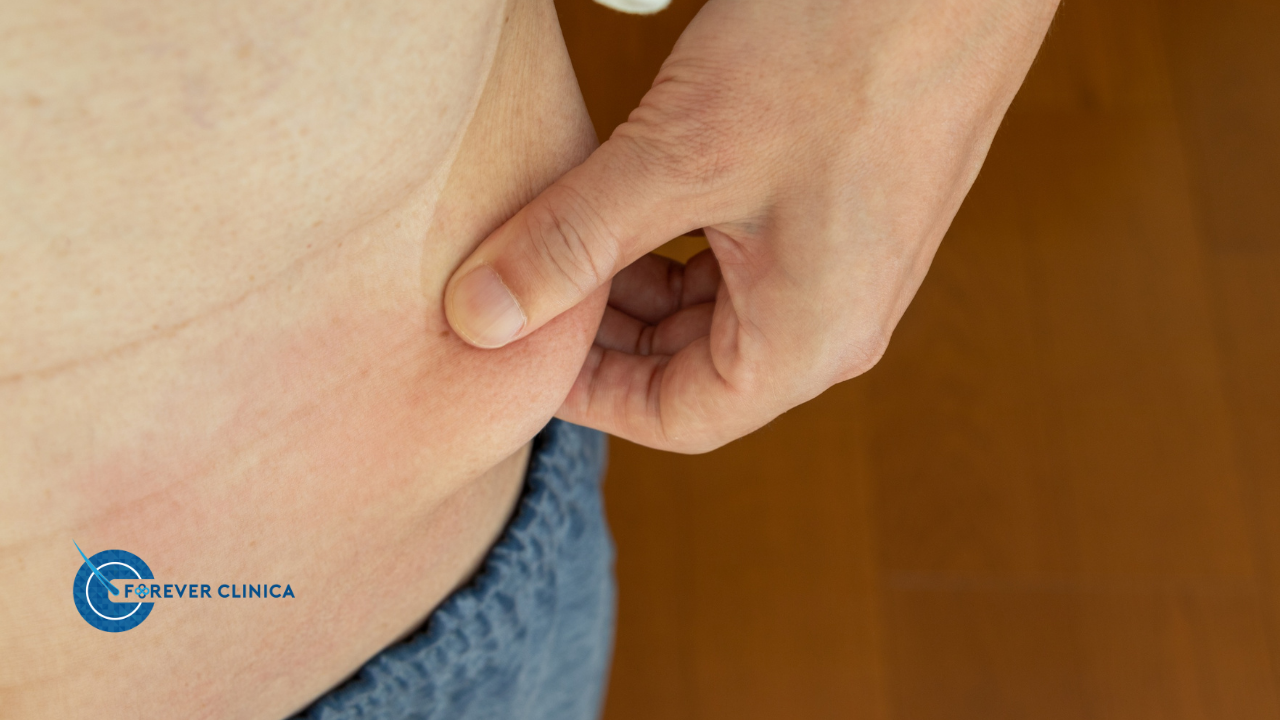
Many of our patients ask, “Can’t I just tone this up with more exercise?” We always strive for honesty: while muscle building is great for your health, it cannot “shrink” skin that has lost its elasticity. Think of your skin like a balloon. If you blow a balloon up to its maximum capacity and leave it that way for a long time, when you let the air out, the rubber remains stretched and wrinkled. The elastic fibers (collagen and elastin) have simply reached their limit. Surgery is the only definitive way to remove that excess and reveal the toned body underneath.
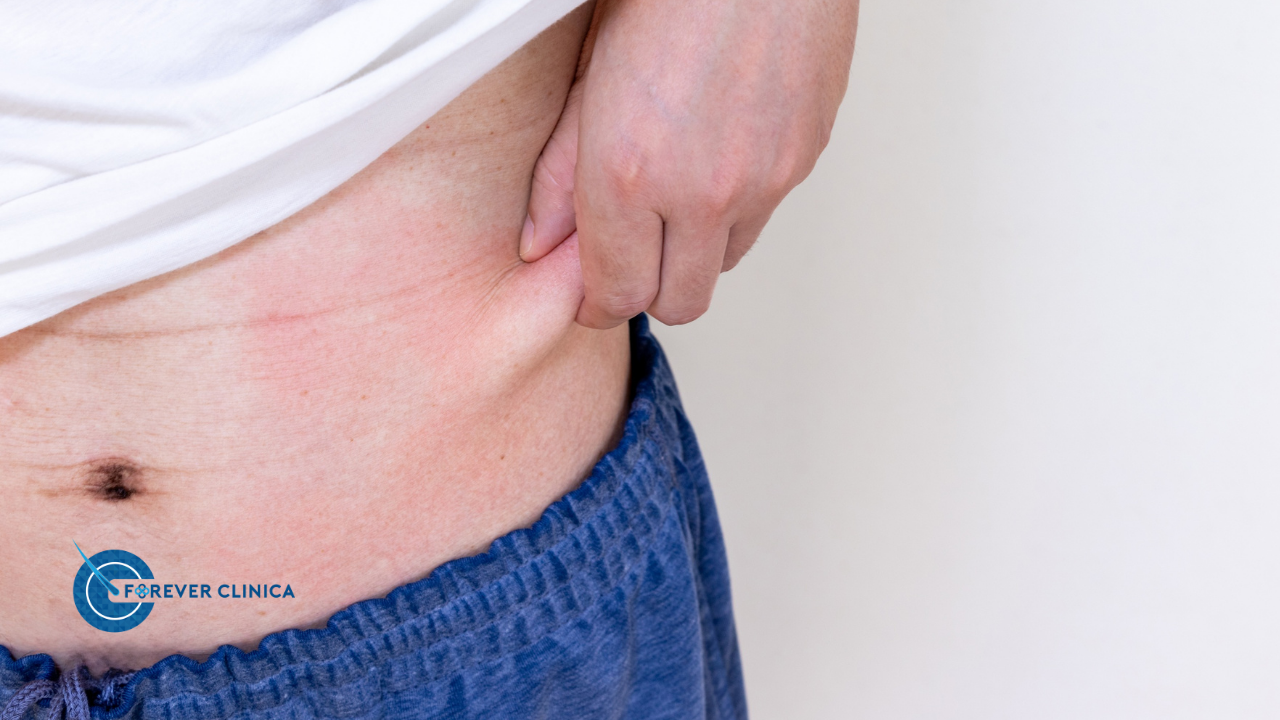
Why Does Skin Sag in the First Place?
Understanding the cause helps in choosing the right treatment. Our skin is a living organ, but it has its limits.
Massive Weight Loss: Especially after gastric sleeve or bypass surgeries, the fat disappears faster than the skin can retract.
Duration of Overweight: The longer the skin has been stretched, the less likely it is to bounce back.
Age: As we get older, our body produces less collagen, which is the “glue” that keeps skin firm.
Genetics: Some people are simply blessed with more “elastic” skin than others.
Sun Exposure and Smoking: Both of these factors damage the skin’s structural integrity, making sagging worse.
The Different Types of Body Contouring Procedures
At Forever Clinica, we don’t believe in a “one size fits all” approach. A body transformation is a custom architectural project. Depending on your needs, we may recommend one or a combination of the following:
1. Tummy Tuck (Abdominoplasty)
This is the most sought-after procedure. We remove the “apron” of skin hanging from the lower abdomen and, crucially, tighten the abdominal muscles that may have separated (diastasis recti). This results in a flat, firm midsection.
2. Arm Lift (Brachioplasty)
If you struggle with what people often call “bat wings,” an arm lift is the solution. We remove the loose skin from the underarm area, extending from the armpit to the elbow, giving your arms a sleek, contoured look.
3. Thigh Lift (Thighplasty)
Loose skin on the inner thighs can cause not just aesthetic unhappiness but also physical discomfort and chafing. A thigh lift reshapes the legs by removing excess skin and fat, resulting in smoother skin and better-proportioned lower body contours.
4. Breast Lift (Mastopexy)
Weight loss often leaves the breasts looking “deflated.” A lift repositions the nipple and removes excess skin to restore a youthful, perkier shape. Sometimes, we combine this with implants to restore lost volume.
5. Lower Body Lift (Belt Lipectomy)
For those with 360-degree sagging (abdomen, hips, and buttocks), a lower body lift is the ultimate transformation. It acts like a “belt,” lifting the entire lower half of the body in one comprehensive surgery.
Why Choose Istanbul, Turkey for Your Transformation?
When it comes to complex surgeries like body contouring, experience is everything. Istanbul, Turkey has become the global capital for aesthetic surgery for several reasons:
Expertise Through High Volume Turkish surgeons, especially at Forever Clinica, handle a much higher volume of cases than most surgeons in Europe or the US. This high frequency translates into refined skills and an “artistic eye” for body proportions.
World-Class Facilities Our hospitals are JCI-accredited, meaning they meet the highest international standards for safety and technology. When you come to Istanbul, you aren’t sacrificing quality for price—you are often getting better care than you would at home.
The “Health Tourism” Experience At Forever Clinica, we turn your surgery into a journey. We handle your VIP transfers, luxury hotel accommodation, and 24/7 nursing support. You get to recover in a city where East meets West, surrounded by history and beauty, which can be incredibly therapeutic for the soul.
The Surgical Process: Step-by-Step
1. The Virtual and Physical Consultation Before you even pack your bags for Istanbul, we conduct a detailed consultation. We discuss your medical history, your goals, and which procedures can be safely combined. Safety is our absolute priority.
2. The Day of Surgery Body contouring is performed under general anesthesia. Depending on the complexity, it can last anywhere from 3 to 7 hours. Our surgeons use advanced techniques to minimize blood loss and ensure the neatest possible incisions.
3. Strategic Scar Placement One of the main concerns is scarring. Our surgeons are masters at “hiding” scars. Most incisions are placed where they can be covered by underwear or swimsuits. Over time, these scars fade from red to a faint silver line.
The Recovery: What to Really Expect
We won’t sugarcoat it: body contouring is major surgery. Your body needs time and grace to heal.
First 48 Hours: You will likely stay in the hospital for observation. You’ll feel tight and tired, but pain is well-managed with medication.
The First 2 Weeks: You will wear a compression garment (a corset). This is your best friend—it reduces swelling and helps the skin “stick” to the new contours.
The First Month: Most of the swelling subsides. You can usually return to a desk job and light walking.
6 Months to a Year: This is when the “wow” factor truly kicks in. The swelling is completely gone, the scars have matured, and your new body is fully revealed.
Common Myths About Skin Sagging Surgery
“I can just get liposuction instead.” Liposuction removes fat, but it does not remove skin. If you have sagging skin and you do liposuction, the sagging will actually look worse because the “stuffing” inside the skin is gone. You need the skin to be surgically removed.
“The weight will come back.” The surgery removes the skin and fat cells permanently. However, you must maintain a stable lifestyle. Significant weight gain after surgery can stretch the remaining skin again.
“It’s only for women.” Actually, male body contouring is one of our fastest-growing areas in Turkey. Men often seek tummy tucks and chest contouring after weight loss to achieve a more masculine, defined physique.
Frequently Asked Questions (FAQ)
1. Is body contouring surgery safe? When performed by board-certified surgeons in an accredited hospital, it is very safe. However, like all surgeries, it carries risks like infection or seroma. We minimize these risks through strict protocols and thorough post-op care.
2. How much does it cost in Istanbul, Turkey? While prices are significantly lower than in the UK or USA, they vary based on the number of areas being treated. Contact us for a personalized quote that includes your hotel and transfers.
3. Will I have a lot of scars? Yes, there will be scars, but they are a trade-off for the removal of sagging skin. Most patients find the scars a small price to pay for the ability to wear fitted clothes and feel comfortable in their skin.
4. When can I see the final results? You will see a difference immediately, but the “final” result takes about 6 to 12 months for the tissues to fully settle and the scars to fade.
5. Can I have children after a tummy tuck? Yes, but it is generally recommended to wait until you are finished having children to ensure the longest-lasting results, as pregnancy will stretch the skin again.
A New Beginning Awaits
Excess skin shouldn’t be the final word on your weight loss story. It is simply a hurdle that we can clear together. At Forever Clinica, we don’t just see a patient; we see a person who has fought hard for their health and deserves to feel beautiful.
Are you ready to shed the weight of the past and step into your new life? Istanbul, Turkey is waiting for you, and so is the best version of yourself.
ℹ️ Results may vary from person to person for every surgical or interventional procedure. It is recommended that you obtain detailed information from your physician before the procedure.